Customs valuation has long stood at the centre of Ethiopia’s trade, investment, and foreign exchange challenges. While revenue protection and foreign currency control remain legitimate state objectives, the persistent reliance on arbitrary reference prices—particularly under Customs Valuation Directive No. 158/2011—has created serious distortions in trade administration, banking operations, and domestic taxation. The recent circular issued by the National Bank of Ethiopia on January 26, 2026, requiring banks to use customs prices as a reference for Letters of Credit, has once again brought this debate to the forefront, exposing the far-reaching consequences of valuation practices that diverge from internationally accepted principles.

Legal Updates
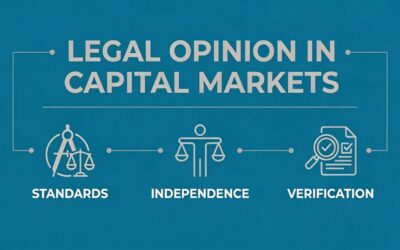
Legal Opinion in Capital Markets: Standards, Independence, and Verification
A) Why Legal Opinion?
Lawyers are envisaged to play pivotal roles in capital market especially in security registration.
Investor Protection: Legal opinions often assess existential risks like litigation, asset ownership, and regulatory compliance. A biased opinion could mislead investors.
Market Integrity: Capital markets rely on trust. Conflicted legal opinions undermine transparency and fairness.
Foreign national’s ownership rights of residential houses, Proclamation No. 1388/2025
The ownership rights of foreign nationals over residential houses are governed by Proclamation No. 1388/2017. The proclamation consists of twenty-one (21) articles organized into four sections.
Ethiopia’s Investment Incentive Reform 2026: Key Legal Shifts from Regulation 517/2022 to 586/2026
Ethiopia has significantly revised its investment incentive regime with the replacement of Investment Incentive Regulation No. 517/2022 by the new Regulation No. 586/2026. This reform shifts the system from multi-year tax holidays and broad customs exemptions to a performance-based framework with targeted incentives. In essence, blanket income tax holidays are eliminated, replaced by reduced tax rates tied to priority sectors and performance, and new incentive categories (such as Special Economic Zones, start-ups, and green investments) have been introduced. The core customs duty benefits are largely retained but with refined conditions. This legal update outlines the key changes between the two regulations across five dimensions: tax incentives, customs duty incentives, administrative procedures, eligibility criteria, and sectoral priorities, and concludes with implications for investors and practitioners.
Legal Insight: New Developments in Ethiopia’s Foreign Exchange Framework
Following the comprehensive macroeconomic reform program, the National Bank of Ethiopia (NBE) has undertaken significant measures aimed at liberalizing the foreign exchange regime and fostering the development of a more efficient and market-oriented forex system. A central pillar of these reforms has been the gradual removal of current account restrictions and the introduction of regulatory flexibility designed to stimulate foreign exchange inflows, encourage investment, and enhance market confidence.
The licensing and supervision of banking business reserve requirements (9th replacement) directive number SBB/97/2025
By Kaleegziyabher Gossaye.
Legal update on The licensing and supervision of banking business reserve requirements (9th replacement) directive number SBB/97/2025
Risk Based Capital Adequacy Requirements for Banks-Directive No. SBB/95/2025
By Kaleegziyabher Gossaye.
The directive is organized into six parts. The first part outlines the general provisions of the directive. The second part deals with definition of capital. The third part discusses the capital requirements for credit risk. The forth and the fifth part extend to the capital requirements of market risks and operational risks. The last part, but not the least, is dedicated to miscellaneous provisions.
Ethiopia’s Amended Income Tax Proclamation: Implications for Revenue, Professionals, & Investors
The goals of the amendment are typically outlined in the preamble of the proclamation. Therefore, the objectives mentioned in the preamble include: improving revenue collection through adjustments to the rates applied to certain incomes; expanding the tax base; creating an efficient system of tax incentives; and curbing tax avoidance strategies, which encompass restrictions on cash payments.
Tax Audits in Crisis: Can Ethiopia’s New Directive Restore Trust in the System?
Ethiopia has introduced new tax audits, conducting procedures, and the Assessment Directive No. 1063/2025, marking a significant development in its tax history. Tax audits represent a major challenge within the Ethiopian tax system; the implementation of tax audits contradicts the voluntary compliance expected from taxpayers under the self-declaration tax policy. During these audits, tax auditors often seek additional taxes without a legal foundation, aiming to meet monthly revenue collection targets. This trend significantly harms taxpayers, leading to non-compliance with tax laws and fostering illegal practices.
The National Bank of Ethiopia issued new directives on June 25, 2025, finalizing the opening of the country’s financial sector to foreign players
Directive No. SBB/94/2025 provides a structured regulatory framework for banking operations in Ethiopia. The directive outlines the procedures for licensing and renewing banking businesses and representative offices. Adhering to these guidelines is crucial for maintaining the stability and integrity of the banking sector in Ethiopia.
Regulating Ethiopia’s Shift to Electric Vehicles: A Legal and Institutional Framework
Explore Ethiopia’s transition to electric vehicles with an in-depth look at the legal and institutional framework shaping the shift. Learn about policies, regulations, and challenges in EV adoption.
Significant Adjustments in Administrative Penalty Waivers Under the New Tax Administration Directive
The Ethiopian tax administration has experienced considerable changes with the implementation of Directive Number 889/2025, which supersedes the previous Directive Number 137/2010. This directive brings important modifications in the categorization and waiver of tax administration penalties.
Dispute over Taxing Undistributed Profit in the Context of Tax Treaties
By Arba Beyene Highlight on Background of Taxing Undistributed Profit. Taxing undistributed profit of companies, more numerously PLCs in Ethiopia, has for a long time been the reason for complaints and proceedings within the tax dispute resolution system. In 2013 the...
Navigating the Maze: Fair Market Value Issues in Ethiopian Tax Law
By Ketema Adane The Importance and Challenges of Fair Market Value: The issue of "Fair Market Value" (FMV) plays a central role in Ethiopian tax law, impacting various aspects like asset costs, sale considerations, and in-kind benefits. It ultimately affects taxes and...
Ethiopia Implements Revised Excise Tax Rates for Beer, Plastic Bags, and Tobacco
By Ketema Adane Excise Taxes: A Dual Role Excise taxes serve a twofold purpose: generating revenue for the government and influencing consumer behavior. They provide a reliable source of income by taxing goods with consistent demand. Additionally, they discourage...
Ethiopia Flips the Script from Banning Crypto to Launching CBDC
By Ketema Adane Ethiopia Enters the Digital Age: From Crypto Ban to CBDC Launch Introduction While Ethiopia's National Bank of Ethiopia (NBE) establishment proclamation (No. 591/2008) designates Birr as the sole legal tender, a significant shift is underway. On June...
Clock Rewind: Ethiopian Tax Amended Assessment Time Limit Controversy Heats Up
By Ketema Adane Bargicho Ethiopian tax policy emphasizes voluntary compliance through self-assessment. This means taxpayers are periodically obligated to calculate and pay their own tax liability according to relevant tax laws. If a taxpayer misses the deadline for...
Punishing the Victim? The Case of Not Allowing Deduction and Return of input tax for Alleged Fraudulent Invoices
By Arba Beyene Introduction Use of fake invoices created problems like brand falsification, money laundering, terrorist financing and claiming input tax return from tax payers’ money. But sometimes it may also put genuine tax payers in a situation where the input tax...