
Punishing the Victim? The Case of Not Allowing Deduction and Return of input tax for Alleged Fraudulent Invoices
By Arba Beyene
Introduction
Use of fake invoices created problems like brand falsification, money laundering, terrorist financing and claiming input tax return from tax payers’ money. But sometimes it may also put genuine tax payers in a situation where the input tax return is denied and the cost incurred at purchase of goods and services is disallowed. This is typical problem that tax payers face in Ethiopia. The problem is exacerbated by inconsistent decisions and reassessment after longtime by tax authority in different cases. This short note tries to discuss the most common problems related to the issue.
- Absence of Definition/Deficient Definition
Fake or illegal (as used alternatively by the tax authority) invoice is not defined in any of tax legislations. Tax Administration Proclamation No. 983/2016 uses the term Fraudulent invoices. Preparing, selling, producing, distributing and using fraudulent invoices to reduce tax liability or claim refund is criminal act as per article 119(1) of tax Administration Proclamation. But there is no definition as to what constitutes fraudulent invoices. From the wording of this provision, it can be inferred that the invoices are mainly used to reduce tax liability or claim refund that tax payer is not entitled. Fraud by its very nature is intentional act for there could be no negligent fraud. Thus for the invoice to be fraudulent, there has to be intention either to reduce tax liability or claim responsibility. Prima facie evidence must be produced to prove that the tax payer used[1] the invoices solely to reduce tax liability or claim tax refund. The practice however, does not conform to requirements of this provision.
There are multiple cases writer of this material handled being Senior Legal Expert at Ministry of Revenues in which the cost is totally disallowed although purchased materials physically exist or sale of which is substantiated with irrefutable documents. In the case between Tatey Business PLC and Ministry of Revenues[2] the materials purchased from those suppliers which later on after the PLC purchased the materials whose cost was disallowed, treated as invoice seller only are supplied to Addis Ababa University for which goods Received Voucher was issued. But the ministry totally disallowed the cost of materials on the ground that purchase of which is substantiated with fraudulent invoices. The same action was taken on certain PLC for purchase of ISUZU box. Auditors of the ministry physically noticed the existence of said box. But they totally disallowed the cost of purchase.
Of course those invoices might have been presented to exaggerate cost as the price of materials stated could not be the real one but to denial of total cost is in appropriate which incurred to realize taxable income. All the same, cost of materials is disallowed on the ground of using fraudulent invoices with deficient definition and without proving the intention of tax payers to reduce tax liability or claiming tax refund.
- Post Facto Publication and Checking
Usual publication of entities (Bogus Traders) that solely established to sell fraudulent invoices is considered to protect tax payers from transacting with those entities in other jurisdictions.[3] Diligent tax payers might check whether the entity they are transacting with is within the list of fraudulent invoice producers or sellers or users. It is proactive measure that is expected from tax authority to protect genuine tax payers so that tax payers check validity of invoices from the portal of tax authority.
Related to this is checking the transaction before input tax return for Goods and Services Tax (GST) or Value Added Tax (VAT). India can be good example in this regard. Section 16 of goods and services act requires the tax authority to check whether the input tax credit (ICT) so filed by the tax payer is genuine before allowing such credit.
We have no such a provision in VAT proclamation No. 285/2002 or its amendment. No proactive publication of those entities engaged in producing or selling or using the fraudulent invoices either. The entities publicized as bogus traders by the Ministry of Revenues of Ethiopia are those legally licensed and their cash register machine was registered at tax authority but disappears by failing to declare their tax sometimes after conducting business of different nature or found not issuing invoices flagrantly. The tax authority publicizes these entities many years after the transaction has been conducted. Then the authority audits back tax payers’ account and disallow the cost substantiated by invoices from those entities. There is no mechanism of protecting even the genuine tax payers.
The implication of disallowing costs substantiated by the invoices from the entities publicized as fraudulent invoices is that the whole cost is considered as profit and 30% of it is corporate income tax and input tax paid at time of purchase is rejected and reclaimed by the tax authority for the purpose of VAT. It is not limited to principal tax but it is charged with cumbersome interest and penalty.
In conclusion, fake or fraudulent invoices created many problems including falsifying brands, money laundering, terrorist financing, corruption and collapse of genuine business operations because of unfair competition and cumbersome tax liability because of rejection of costs and expenses incurred in furtherance of business operation. It is inappropriate for the tax authority disallowing costs, and punishing the genuine tax payers whose transactions are substantiated by irrefutable evidences such as physical existence of materials purchased. Therefore the Ethiopian tax authority taking lesson from jurisdiction such as India should establish mechanisms like establish system to check validity of invoices from its portal and proactive publication of bogus traders through unreliable tax bases and checking input tax refund claims before allowing the same to protect genuine tax payers. Disallowing costs for which concrete evidences produced is also contrary to the article 22 sub article 1(a) of income tax proclamation No. 979/2016 of Ethiopia and therefore, there has to be way out for such costs are allowed as deductible expense by directive on deductible costs.
[1] I use the word using fraudulent invoices because the tax authority rarely accesses those who produce, prepare or sell fraudulent invoices.
[2] Tatey Business PLC was appellant and Ministry of Revenues was respondent in the case at Federal Tax Appeal Commission.
[3] False invoices and Tax fraud | Inter-American Center of Tax Administrations (ciat.org) accessed on 16/01/2024
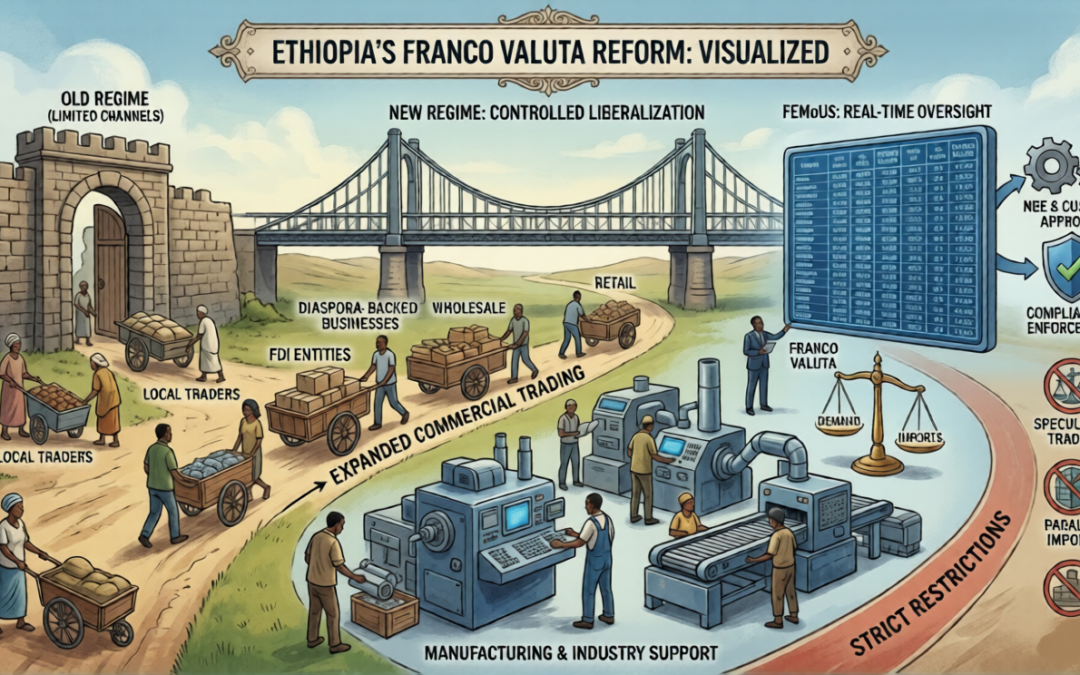
Ethiopia’s Franco Valuta Reform: Expanded Import Channels with Targeted Restrictions on Trading and Manufacturing
Businesses that combine strategic structuring with rigorous compliance will be best positioned to unlock the full commercial value of Franco Valuta.

Draft Amendment to the Federal Tax Administration Proclamation No. 983/2016
The Federal Democratic Republic of Ethiopia has introduced a draft amendment to the Federal Tax Administration Proclamation No. 983/2016, which establishes the legal framework governing tax administration, compliance, enforcement, and dispute resolution in Ethiopia.

Ethiopia’s Customs Valuation Reform: Bridging the Gap Between Directive and Practice
Customs valuation has long stood at the centre of Ethiopia’s trade, investment, and foreign exchange challenges. While revenue protection and foreign currency control remain legitimate state objectives, the persistent reliance on arbitrary reference prices—particularly under Customs Valuation Directive No. 158/2011—has created serious distortions in trade administration, banking operations, and domestic taxation. The recent circular issued by the National Bank of Ethiopia on January 26, 2026, requiring banks to use customs prices as a reference for Letters of Credit, has once again brought this debate to the forefront, exposing the far-reaching consequences of valuation practices that diverge from internationally accepted principles.
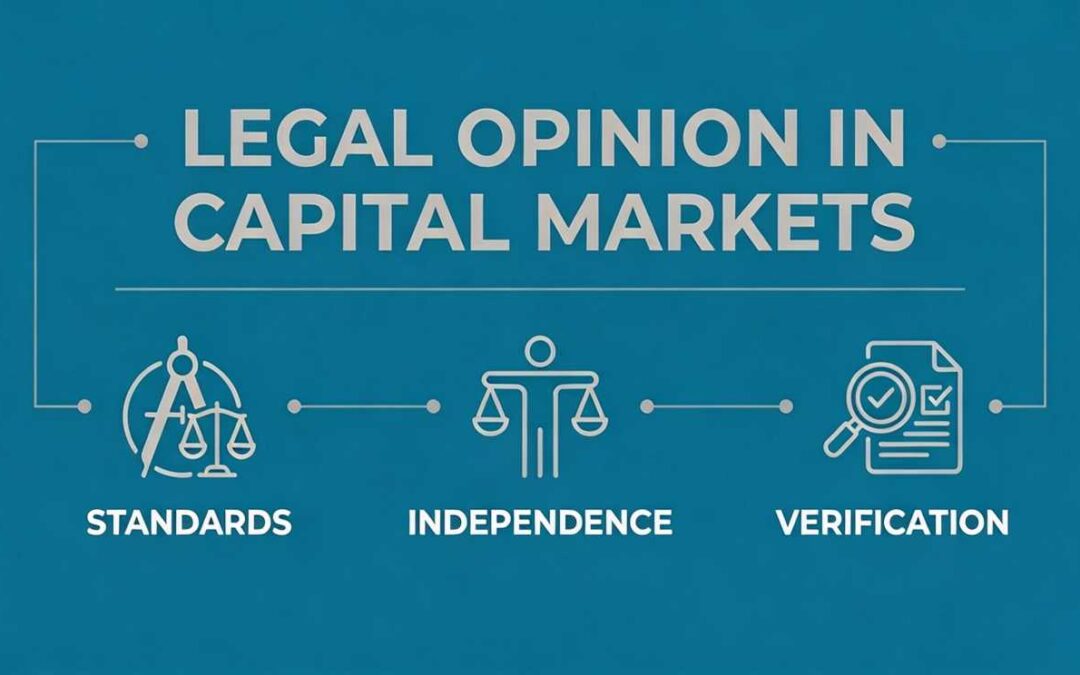
Legal Opinion in Capital Markets: Standards, Independence, and Verification
A) Why Legal Opinion?
Lawyers are envisaged to play pivotal roles in capital market especially in security registration.
Investor Protection: Legal opinions often assess existential risks like litigation, asset ownership, and regulatory compliance. A biased opinion could mislead investors.
Market Integrity: Capital markets rely on trust. Conflicted legal opinions undermine transparency and fairness.

Foreign national’s ownership rights of residential houses, Proclamation No. 1388/2025
The ownership rights of foreign nationals over residential houses are governed by Proclamation No. 1388/2017. The proclamation consists of twenty-one (21) articles organized into four sections.
Ethiopia’s Investment Incentive Reform 2026: Key Legal Shifts from Regulation 517/2022 to 586/2026
Ethiopia has significantly revised its investment incentive regime with the replacement of Investment Incentive Regulation No. 517/2022 by the new Regulation No. 586/2026. This reform shifts the system from multi-year tax holidays and broad customs exemptions to a performance-based framework with targeted incentives. In essence, blanket income tax holidays are eliminated, replaced by reduced tax rates tied to priority sectors and performance, and new incentive categories (such as Special Economic Zones, start-ups, and green investments) have been introduced. The core customs duty benefits are largely retained but with refined conditions. This legal update outlines the key changes between the two regulations across five dimensions: tax incentives, customs duty incentives, administrative procedures, eligibility criteria, and sectoral priorities, and concludes with implications for investors and practitioners.

Legal Insight: New Developments in Ethiopia’s Foreign Exchange Framework
Following the comprehensive macroeconomic reform program, the National Bank of Ethiopia (NBE) has undertaken significant measures aimed at liberalizing the foreign exchange regime and fostering the development of a more efficient and market-oriented forex system. A central pillar of these reforms has been the gradual removal of current account restrictions and the introduction of regulatory flexibility designed to stimulate foreign exchange inflows, encourage investment, and enhance market confidence.
The licensing and supervision of banking business reserve requirements (9th replacement) directive number SBB/97/2025
By Kaleegziyabher Gossaye.
Legal update on The licensing and supervision of banking business reserve requirements (9th replacement) directive number SBB/97/2025

Risk Based Capital Adequacy Requirements for Banks-Directive No. SBB/95/2025
By Kaleegziyabher Gossaye.
The directive is organized into six parts. The first part outlines the general provisions of the directive. The second part deals with definition of capital. The third part discusses the capital requirements for credit risk. The forth and the fifth part extend to the capital requirements of market risks and operational risks. The last part, but not the least, is dedicated to miscellaneous provisions.
Ethiopia’s Amended Income Tax Proclamation: Implications for Revenue, Professionals, & Investors
The goals of the amendment are typically outlined in the preamble of the proclamation. Therefore, the objectives mentioned in the preamble include: improving revenue collection through adjustments to the rates applied to certain incomes; expanding the tax base; creating an efficient system of tax incentives; and curbing tax avoidance strategies, which encompass restrictions on cash payments.