
States’ Right to Counterclaim Gradually Climbs International Courts
The counterclaim is a domestic law concept, which is gaining international recognition in investor-state dispute settlement, either through treaties or tribunals, writes Yehualashet Tamiru Tegegn (yehuala5779@gmail.com), lawyer and researcher. The views and opinions stated in this article are solely those of the author and do not represent the institutions or projects he is affiliated with.
A counterclaim is the right of the respondent party in the proceeding to turn against the plaintiff and pursue its own claims. Under domestic law, the requirement to accept counterclaims is provided under Civil Procedure Law as it is a procedural matter. A counterclaim is aimed at achieving procedural economy by preventing the duplication of cases and the cost of proceedings.
There are two requirements: the counterclaim should be fall within the jurisdiction of the court entertaining the principal claim and it should be related to the main action brought by the plaintiff. While civil procedure is the primary source in domestic litigation, the principal foundation of counterclaims under international law is unclear. As a claimant, investors often objected to counterclaims brought by the respondent state because of the absence of clear recognition, among others, in bilateral investment treaties (BITs).
The first and foremost source is the statute of the International Court of Justice (ICJ). The 38th article of the document allows for the court whose function is to decide under international law such disputes shall apply, among other things, the general principles of law recognised by “civilised nations”.
For a domestic principle and right to be elevated as a source of law at the international level, it should have to be recognised not merely in one legal system but in others as well. As the right to bring counterclaims is somehow recognised under major legal systems, it is possible to say that it is recognised under international law. Therefore, arguably, one source of counterclaim under international law is the ICJ statute.
The right to file a counterclaim is also well recognised under various institutional arbitrations. One of the most well-regarded is the Permanent Court of Arbitration. Its rules of arbitration in various instances indicate the right of the respondent to bring counterclaims.
The second institutional arbitration which recognises counterclaim is the United Nations Commission on International Trade Law. In its rules of arbitration, it said that “in his statement of defence, or at a later stage in the arbitral proceedings, if the arbitral tribunal decides that the delay was justified under the circumstances, the respondent may make a counterclaim arising out of the same contract or rely on a claim arising out of the same contract for the purpose of a set-off.”
The scope of application of counterclaim under the Commission seems narrow. It does not refer to counterclaims related to a contract but rather only those arising out of the same contract. Because of this, under the Commission’s rules of arbitration, a tort claim does not arise out of a contract but merely related to it, and might be rejected on jurisdictional ground.
The Convention on the Settlement of Investment Disputes between States & Nationals of Other States (ICSID Convention) and its rule of arbitration is the other institutional example that provides the right of the respondent to bring counterclaims. A valid and admissible counterclaim before the ICSID should fulfil three elements: the parties should agree to submit a counterclaim, it should be within the jurisdiction of the Convention and arise directly out of the subject of the dispute. If the counterclaim has sufficient closeness with the principal claim, the tribunal will assume jurisdiction on prima facie.
For instance, under the treaty between Ethiopia and Qatar, “any dispute between an investor of one Contracting Party and the other Contracting Party concerns an alleged breach of an obligation.” As far as the dispute emanates from the terms and conditions specified under the treaty, the host state is entitled to bring a counterclaim.
Furthermore, no exclusion clause in any BIT prohibits the host state from bringing counterclaim. As one of the cardinal rules of interpretation dictates, what is not forbidden is presumed to be permitted.
Although, in principle, the host state as a litigant party is entitled to any defence, the government is limited at least in the area of set-off and counterclaim for the purpose of ‘denial of benefit.’ The right to counterclaim is also indicated in the model BITs.
Various counties developed model BITs to serve as an archetype for negotiating future investment treaties. Unlike the global north model, the global south has incorporated an explicit recognition of the host state’s right in bringing counterclaim. For instance, under the Southern African Development Countries (SADC) model, a host state may initiate a counterclaim against the investor before any tribunal is established pursuant to the agreement.
Article 38 of the statute of ICJ also recognises judicial decisions as a subsidiary source of international law. These decisions mainly emanate from the international court of justice, municipal courts, prize courts and international arbitration tribunal. The decision made by international arbitration tribunals are not binding. Still, they have often been followed as precedents by the other tribunal for similarly situated cases and are one sources of counterclaims.
The ‘Bevenutti and Bonfant SRL v. People’s Republic of Congo’ case is interesting here. An Italian Limited Company, Benvenuti & Bonfant Srl (“B&B”), whose registered office is in Rome, and the government of Congo jointly formed and run a business organisation called PLASCO. From November 1975 on, the government embarked upon a policy of “radicalisation,” which involved the creation of government agencies such as the “Management-Party-Union” (“the Trilogy”), and interference by these agencies in the management of PLASCO. Considering that their personal safety was no longer guaranteed, most of the Italian personnel of PLASCO hastily left the Congo and the Army subsequently occupied their registered office.
In this case, the respondent, which is the Republic of Congo, made a counterclaim to damages. It was for the non-payment of duties and taxes relating to imports, overpricing of raw materials, damages for defaults in the execution of the supply agreement, defects relating to the construction of the plant and reparation of intangible loss (“prejudice moral”). The tribunal accepted and entertained the counterclaim of the respondent.
In another case, ‘Desert Line Projects v. Yemen,’ in which a dispute arose out of disagreements over amounts owed for executed works under several road construction contracts, leading to the suspension of works. The claimant argued that the respondent breached the bilateral investment treaty and international law. By way of counterclaim and set-off, the respondent claimed that to the extent the tribunal exercises jurisdiction over the case, it is entitled to damages resulting from the breach of contract and damages for the unfulfilled obligations.
All in all, the counterclaim is a domestic law concept which is gaining international recognition in investor-state dispute settlement. Although there is no explicit reference in BITs, a counterclaim is well recognised under various institutional arbitrations and case laws, which as per Article 38 of the ICJ statute, are one of the sources of international laws. The tribunal may entertain a counterclaim if it comes within the jurisdiction of the tribunal and is directly connected with the subject matter of the initial or original claim by the other party.

Ethiopia’s Customs Valuation Reform: Bridging the Gap Between Directive and Practice
Customs valuation has long stood at the centre of Ethiopia’s trade, investment, and foreign exchange challenges. While revenue protection and foreign currency control remain legitimate state objectives, the persistent reliance on arbitrary reference prices—particularly under Customs Valuation Directive No. 158/2011—has created serious distortions in trade administration, banking operations, and domestic taxation. The recent circular issued by the National Bank of Ethiopia on January 26, 2026, requiring banks to use customs prices as a reference for Letters of Credit, has once again brought this debate to the forefront, exposing the far-reaching consequences of valuation practices that diverge from internationally accepted principles.
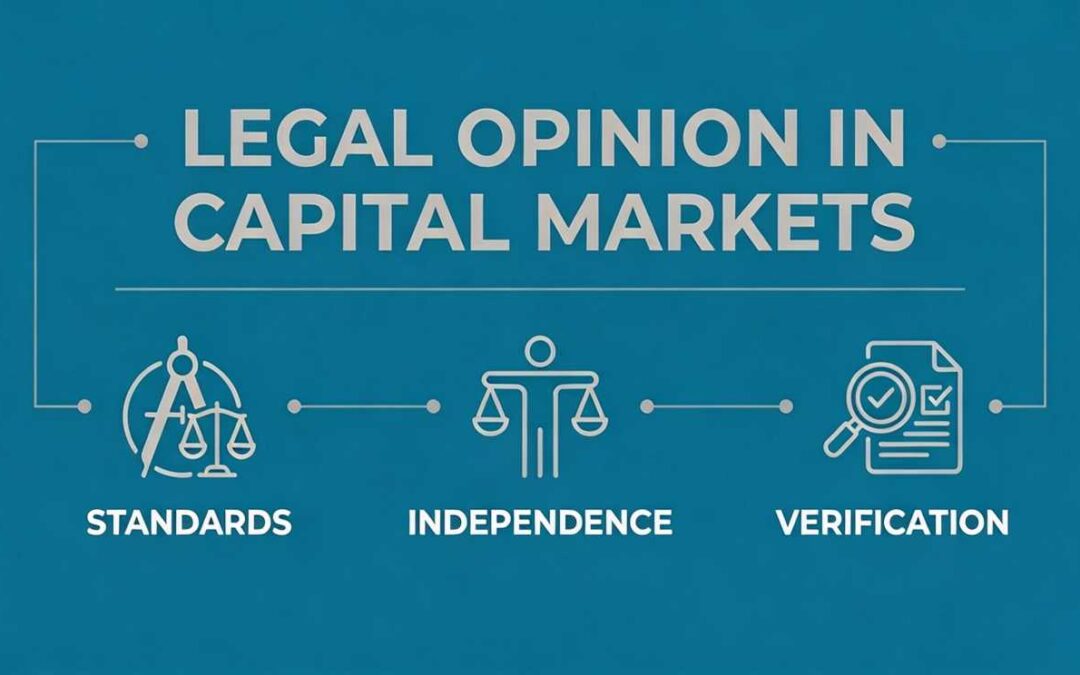
Legal Opinion in Capital Markets: Standards, Independence, and Verification
A) Why Legal Opinion?
Lawyers are envisaged to play pivotal roles in capital market especially in security registration.
Investor Protection: Legal opinions often assess existential risks like litigation, asset ownership, and regulatory compliance. A biased opinion could mislead investors.
Market Integrity: Capital markets rely on trust. Conflicted legal opinions undermine transparency and fairness.

Foreign national’s ownership rights of residential houses, Proclamation No. 1388/2025
The ownership rights of foreign nationals over residential houses are governed by Proclamation No. 1388/2017. The proclamation consists of twenty-one (21) articles organized into four sections.

Ethiopia’s Investment Incentive Reform 2026: Key Legal Shifts from Regulation 517/2022 to 586/2026
Ethiopia has significantly revised its investment incentive regime with the replacement of Investment Incentive Regulation No. 517/2022 by the new Regulation No. 586/2026. This reform shifts the system from multi-year tax holidays and broad customs exemptions to a performance-based framework with targeted incentives. In essence, blanket income tax holidays are eliminated, replaced by reduced tax rates tied to priority sectors and performance, and new incentive categories (such as Special Economic Zones, start-ups, and green investments) have been introduced. The core customs duty benefits are largely retained but with refined conditions. This legal update outlines the key changes between the two regulations across five dimensions: tax incentives, customs duty incentives, administrative procedures, eligibility criteria, and sectoral priorities, and concludes with implications for investors and practitioners.

Legal Insight: New Developments in Ethiopia’s Foreign Exchange Framework
Following the comprehensive macroeconomic reform program, the National Bank of Ethiopia (NBE) has undertaken significant measures aimed at liberalizing the foreign exchange regime and fostering the development of a more efficient and market-oriented forex system. A central pillar of these reforms has been the gradual removal of current account restrictions and the introduction of regulatory flexibility designed to stimulate foreign exchange inflows, encourage investment, and enhance market confidence.
The licensing and supervision of banking business reserve requirements (9th replacement) directive number SBB/97/2025
By Kaleegziyabher Gossaye.
Legal update on The licensing and supervision of banking business reserve requirements (9th replacement) directive number SBB/97/2025

Risk Based Capital Adequacy Requirements for Banks-Directive No. SBB/95/2025
By Kaleegziyabher Gossaye.
The directive is organized into six parts. The first part outlines the general provisions of the directive. The second part deals with definition of capital. The third part discusses the capital requirements for credit risk. The forth and the fifth part extend to the capital requirements of market risks and operational risks. The last part, but not the least, is dedicated to miscellaneous provisions.

Ethiopia’s Amended Income Tax Proclamation: Implications for Revenue, Professionals, & Investors
The goals of the amendment are typically outlined in the preamble of the proclamation. Therefore, the objectives mentioned in the preamble include: improving revenue collection through adjustments to the rates applied to certain incomes; expanding the tax base; creating an efficient system of tax incentives; and curbing tax avoidance strategies, which encompass restrictions on cash payments.

U.S. International Tax Law in a Coffee Bean
The highlands of Ethiopia are widely regarded as the birthplace of coffee. The story of Ethiopian coffee dates back to around 850 AD, when both Arabica and Robusta coffee are believed to have originated. Today, Ethiopia remains the top coffee producer in Africa, cultivating over 5,000 varieties. Coffee is a major global export for the country, where agriculture remains a key driver of the economy. Ethiopia also ranks first in wheat production and third in maize production across Africa.

Tax Audits in Crisis: Can Ethiopia’s New Directive Restore Trust in the System?
Ethiopia has introduced new tax audits, conducting procedures, and the Assessment Directive No. 1063/2025, marking a significant development in its tax history. Tax audits represent a major challenge within the Ethiopian tax system; the implementation of tax audits contradicts the voluntary compliance expected from taxpayers under the self-declaration tax policy. During these audits, tax auditors often seek additional taxes without a legal foundation, aiming to meet monthly revenue collection targets. This trend significantly harms taxpayers, leading to non-compliance with tax laws and fostering illegal practices.