

Foreign national’s ownership rights of residential houses, Proclamation No. 1388/2025
The ownership rights of foreign nationals over residential houses are governed by Proclamation No. 1388/2017. The proclamation consists of twenty-one (21) articles organized into four sections.
The first section contains the general provisions, including definitions and the scope of application. In this section, Key terms such as foreign nationals, diplomats, Lease, residential houses, family, the principle of reciprocity, and the mandated ministry are clearly defined. The scope of the proclamation is limited exclusively to foreign nationals.
The second section addresses the rights, prerequisites, and restrictions applicable to foreign nationals in relation to the ownership of residential houses. This section sets out the eligibility criteria for ownership and the way access to the land is obtained. It further empowers the Ministry of Urban and Infrastructure, through a directive, to restrict certain foreign nationals from exercising such ownership rights.
Moreover, this section outlines both the rights and obligations of foreign nationals. Foreign investors are entitled to own a residential house without being subject to a minimum monetary threshold as per Article 6 of the proclamation. While those who are not investors in Ethiopia are expected to invest not less than 150000 (one hundred fifty thousand) USD in the house that would be bought. The proclamation also enumerates additional requirements that must be fulfilled. Foreign nationals are entitled to enjoy property rights equivalent to those of Ethiopians citizens; however, they are prohibited from using the residential houses for commercial purposes. The proclamation further guarantees the right to transfer income derived from the rent or sale of the property and grants ancillary rights, including eligibility for a resident permit and a multiple-entry visa. Conversely, the law also imposes specific obligations on foreign nationals in relation to compliance.
The third section deals with the application procedure, permit, and ownership certification. A foreign national seeking to acquire a residential house must apply to the ministry, accompanied by all required documents and evidence of compliance with the prescribed criteria. The ministry is required to render a decision within thirty (30) days from the date of receipt of a complete application. Where the application is incomplete, the ministry must notify the applicant within five working days. Upon submission of the missing documents, the ministry shall reconsider the application and issue its decision in accordance with Article 14 (4) of the proclamation.
The Fourt and final section contain miscellaneous provisions. It obliges all concerned people and institutions to cooperate in the implementation of this proclamation, as well as any regulation and directives issued pursuant thereto. It further mandates land administration authorities to issue title deeds to foreign nationals in accordance with the law, on equal footing with Ethiopian citizens. Additionally, the proclamation repeals articles 390-393 of the civil code and other investment proclamation provisions that are inconsistent with this proclamation.
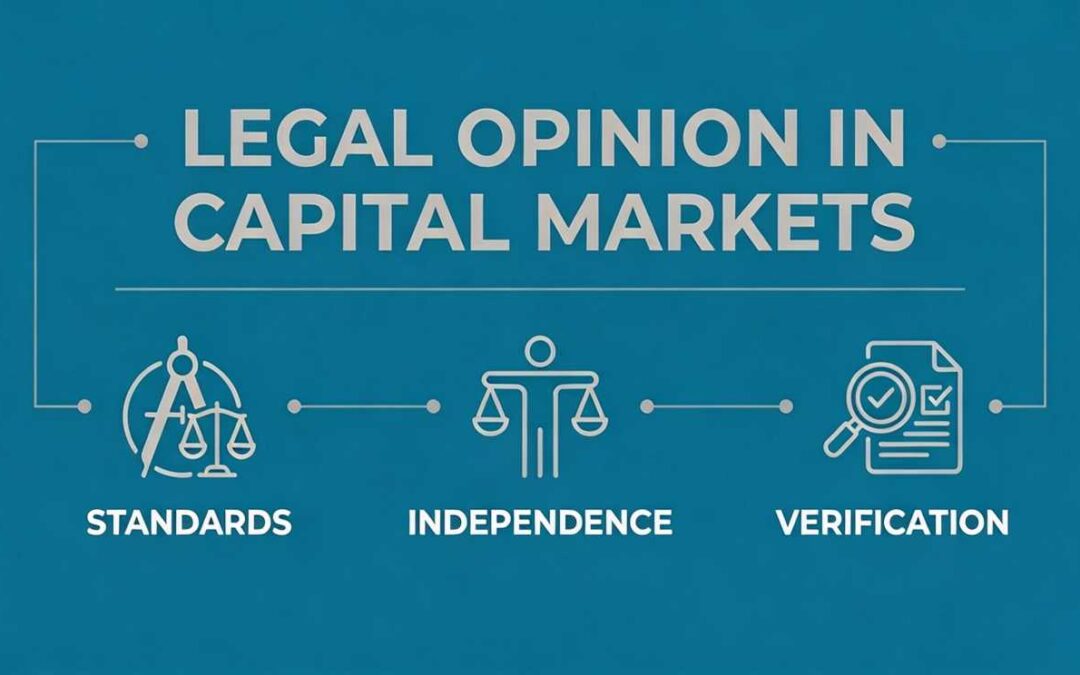
Legal Opinion in Capital Markets: Standards, Independence, and Verification
A) Why Legal Opinion?
Lawyers are envisaged to play pivotal roles in capital market especially in security registration.
Investor Protection: Legal opinions often assess existential risks like litigation, asset ownership, and regulatory compliance. A biased opinion could mislead investors.
Market Integrity: Capital markets rely on trust. Conflicted legal opinions undermine transparency and fairness.

Ethiopia’s Investment Incentive Reform 2026: Key Legal Shifts from Regulation 517/2022 to 586/2026
Ethiopia has significantly revised its investment incentive regime with the replacement of Investment Incentive Regulation No. 517/2022 by the new Regulation No. 586/2026. This reform shifts the system from multi-year tax holidays and broad customs exemptions to a performance-based framework with targeted incentives. In essence, blanket income tax holidays are eliminated, replaced by reduced tax rates tied to priority sectors and performance, and new incentive categories (such as Special Economic Zones, start-ups, and green investments) have been introduced. The core customs duty benefits are largely retained but with refined conditions. This legal update outlines the key changes between the two regulations across five dimensions: tax incentives, customs duty incentives, administrative procedures, eligibility criteria, and sectoral priorities, and concludes with implications for investors and practitioners.

Legal Insight: New Developments in Ethiopia’s Foreign Exchange Framework
Following the comprehensive macroeconomic reform program, the National Bank of Ethiopia (NBE) has undertaken significant measures aimed at liberalizing the foreign exchange regime and fostering the development of a more efficient and market-oriented forex system. A central pillar of these reforms has been the gradual removal of current account restrictions and the introduction of regulatory flexibility designed to stimulate foreign exchange inflows, encourage investment, and enhance market confidence.
The licensing and supervision of banking business reserve requirements (9th replacement) directive number SBB/97/2025
By Kaleegziyabher Gossaye.
Legal update on The licensing and supervision of banking business reserve requirements (9th replacement) directive number SBB/97/2025

Risk Based Capital Adequacy Requirements for Banks-Directive No. SBB/95/2025
By Kaleegziyabher Gossaye.
The directive is organized into six parts. The first part outlines the general provisions of the directive. The second part deals with definition of capital. The third part discusses the capital requirements for credit risk. The forth and the fifth part extend to the capital requirements of market risks and operational risks. The last part, but not the least, is dedicated to miscellaneous provisions.

Ethiopia’s Amended Income Tax Proclamation: Implications for Revenue, Professionals, & Investors
The goals of the amendment are typically outlined in the preamble of the proclamation. Therefore, the objectives mentioned in the preamble include: improving revenue collection through adjustments to the rates applied to certain incomes; expanding the tax base; creating an efficient system of tax incentives; and curbing tax avoidance strategies, which encompass restrictions on cash payments.

U.S. International Tax Law in a Coffee Bean
The highlands of Ethiopia are widely regarded as the birthplace of coffee. The story of Ethiopian coffee dates back to around 850 AD, when both Arabica and Robusta coffee are believed to have originated. Today, Ethiopia remains the top coffee producer in Africa, cultivating over 5,000 varieties. Coffee is a major global export for the country, where agriculture remains a key driver of the economy. Ethiopia also ranks first in wheat production and third in maize production across Africa.
Tax Audits in Crisis: Can Ethiopia’s New Directive Restore Trust in the System?
Ethiopia has introduced new tax audits, conducting procedures, and the Assessment Directive No. 1063/2025, marking a significant development in its tax history. Tax audits represent a major challenge within the Ethiopian tax system; the implementation of tax audits contradicts the voluntary compliance expected from taxpayers under the self-declaration tax policy. During these audits, tax auditors often seek additional taxes without a legal foundation, aiming to meet monthly revenue collection targets. This trend significantly harms taxpayers, leading to non-compliance with tax laws and fostering illegal practices.

The National Bank of Ethiopia issued new directives on June 25, 2025, finalizing the opening of the country’s financial sector to foreign players
Directive No. SBB/94/2025 provides a structured regulatory framework for banking operations in Ethiopia. The directive outlines the procedures for licensing and renewing banking businesses and representative offices. Adhering to these guidelines is crucial for maintaining the stability and integrity of the banking sector in Ethiopia.

Regulating Ethiopia’s Shift to Electric Vehicles: A Legal and Institutional Framework
Explore Ethiopia’s transition to electric vehicles with an in-depth look at the legal and institutional framework shaping the shift. Learn about policies, regulations, and challenges in EV adoption.