
Ethiopia’s New Commercial Code: Potential Boon or Bane for Minority Stakeholders?
The new squeeze-out provision in Ethiopia’s Commercial Code may represent a welcome development, but it could face challenges. The evolution of corporate law is a chess game of its own, requiring careful strategies to protect all players’ rights, from controlling shareholders to minorities. A checkmate in this game could mean a more equitable, efficient, and sustainable business landscape for all, writes Yehualashet Tamiru, adjunct lecturer of law at Addis Abeba University.
In the ever-evolving tableau of corporate law, the notion of business organisations as the offspring of partnership agreements stands out. These are binding contracts between two or more individuals aspiring to fuse their resources for economic pursuits and share the fruits and losses of their efforts. Among the panoply of features that characterise business organisations, one key aspect is the convergence of shareholders’ interests.
In this elaborate corporate chess game, every shareholder’s strategy is obvious: bolster the company’s profitability and reap the most rewarding dividends. By comparison, other contractual engagements, such as sales contracts, reveal a divergence of interests; sellers aim to offload their product at the highest price, while buyers strive for the opposite. Yet, within a company, the interests appear aligned.
However, in the corporate labyrinth, there is the occasional beast of minority shareholders, who grow hostile towards their fellow shareholders and the corporate objectives instead of cooperating. In such a twist, the axe falls on the minority shareholders to ensure business sustainability and protect the rights of the more extensive shareholder base.
Enter the squeeze-out mechanism, a potent tool in the arsenal of corporate governance. It empowers controlling shareholders to enforce a departure on minority shareholders by offering them an exit price. The display of this power, bare and formidable, allows the controlling shareholders to openly force the minority shareholders to vacate the company’s notional premises.
Ethiopia’s freshly baked Commercial Code lends power to controlling shareholders to absorb the majority of shares in a company, provided the minority shareholders’ rights are not trampled underfoot. Thus, any shareholder with shares symbolising 90pc or more of the company’s capital can insist that minority shareholders have their shares redeemed by them.
The code, however, maintains a stoic silence on what comprises an acceptable ground to pressure a minority shareholder into selling their shares. Observations from other jurisdictions and sections of the code that venture partnership agreements suggest severe disagreements between shareholders over the company’s strategy, objectives, and pivotal decisions can suffice. The need to keep the company out of harm’s way can also qualify as grounds for a takeover, provided it is expressed as a critical business necessity and executed in good faith.
Ethiopia’s new Commercial Code outlines procedural requirements for freezing out or squeezing out minority shareholders. These prerequisites are fivefold.
First and foremost is the principle of equality, which carries two interpretations: the equality of shares and the equality of shareholders. Each share must carry at least one vote unless legal conditions negate the voting right. Minority shareholders can also request the majority to purchase their shares.
Another stipulation calls for a fair exit price to prevent undervaluing or overvaluing proposed by the majority. If the minority shareholders reject the price offered by the majority shareholder, they can request a court to appoint an expert to value the market price of the shares. Ordinarily, the cost of the proceeding is borne by the losing party. Still, if the expert’s redemption price exceeds what the majority shareholder offers, a court may order the minority shareholder to cover the costs wholly or partially.
The mandate is a five-week window for minority shareholders to surrender their shares to the majority. This requirement brings up certain ambiguities. For instance, if the minority shareholders surrender their shares within the stipulated period, but the payment from the controlling shareholders is delayed, the code offers no clarity.
And then there is a requirement for court oversight. The court can either dismiss an application to restrain a squeeze-out from a dissenting minority or permit it and block the takeover. A takeover can be prevented if it is found to be harmful to the company’s interests or designed to benefit the majority shareholders unfairly. Courts in Ethiopia are typically seen as operating on a principle of fairness and equity.
It is inferred from the code that courts will endeavour to facilitate takeovers on equitable terms. However, barring blatant errors or illegality in valuation, it is improbable for minorities to contest the takeover price successfully.
The final requirement is to give prior written notice with all the terms and conditions of the takeover, including the price.
While the legal framework for squeeze-outs, as enshrined in the law, has been designed with these prerequisites, potential pitfalls abound.
One glaring loophole is the timing of the offer, which remains at the discretion of the controlling shareholders. They could offer during a downturn when the company’s performance is lacklustre. Alternatively, they could time the offer to coincide with an expected upswing in the company’s fortunes, information that minority shareholders might lack due to their position.
Further opportunism could occur if the controlling shareholders decrease the company’s capital by reducing the par value. This manoeuvre would inevitably cause a slump in the selling price of shares.
An added ramification of this forced takeover is the potential for increased tax exposure for minority shareholders. Minority shareholders, even if they sell their shares without full consent, must pay capital gains tax on the transaction’s proceeds. It would seem that the law leaves minority shareholders vulnerable to an unwelcome tax burden.
However, these provisions could face constitutional challenges from minority shareholders. Ethiopia’s Constitution guarantees the right to private property for every citizen. Only the state can expropriate private property, and only for the public good. Forcing a shareholder to sell their company stake could be deemed unconstitutional.
In private matters, where controlling shareholders force the minority shareholders to exit the corporation, there is no public interest at stake. Even if one argues that forcing out minority shareholders could boost company efficiency or protect the majority and other stakeholders, expropriation of private property is the state’s prerogative, not a right of private entities. The Constitution only acknowledges vertical relationships in the context of expropriation, not horizontal ones.
It defines private property as any tangible or intangible product with the value produced by an individual citizen’s labour, creativity, enterprise, or capital, associations with legal personality, or in some cases, communities empowered by law to own property collectively. Thus, shares fall under this definition of private property, and shareholder rights under the Commercial Code should be interpreted within this constitutional framework.

Ethiopia’s Customs Valuation Reform: Bridging the Gap Between Directive and Practice
Customs valuation has long stood at the centre of Ethiopia’s trade, investment, and foreign exchange challenges. While revenue protection and foreign currency control remain legitimate state objectives, the persistent reliance on arbitrary reference prices—particularly under Customs Valuation Directive No. 158/2011—has created serious distortions in trade administration, banking operations, and domestic taxation. The recent circular issued by the National Bank of Ethiopia on January 26, 2026, requiring banks to use customs prices as a reference for Letters of Credit, has once again brought this debate to the forefront, exposing the far-reaching consequences of valuation practices that diverge from internationally accepted principles.
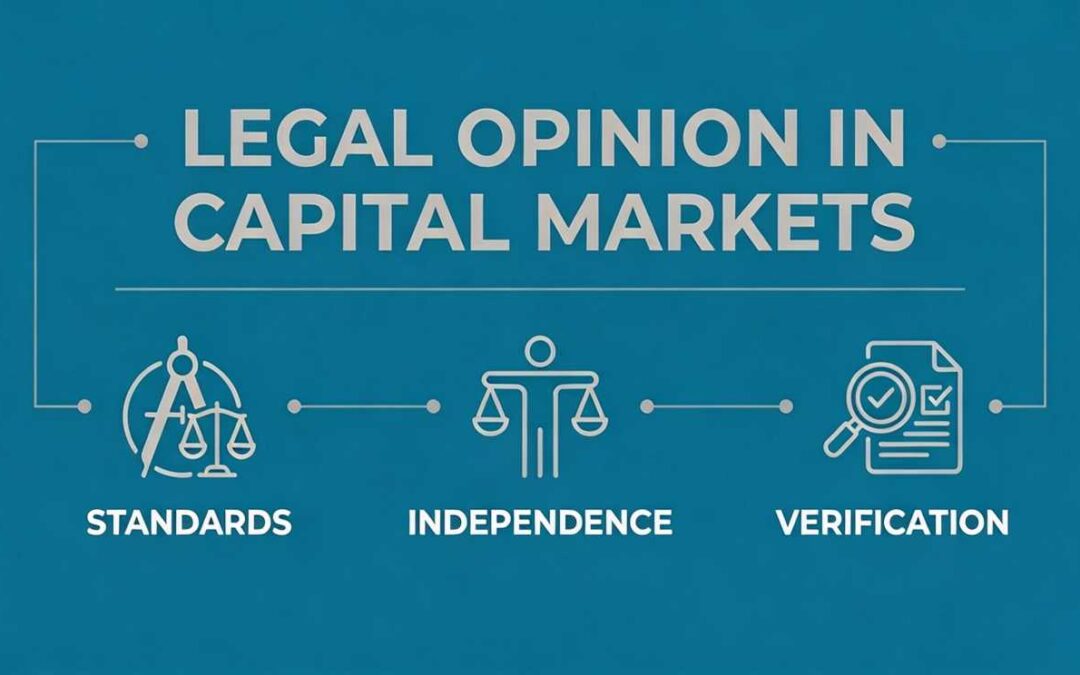
Legal Opinion in Capital Markets: Standards, Independence, and Verification
A) Why Legal Opinion?
Lawyers are envisaged to play pivotal roles in capital market especially in security registration.
Investor Protection: Legal opinions often assess existential risks like litigation, asset ownership, and regulatory compliance. A biased opinion could mislead investors.
Market Integrity: Capital markets rely on trust. Conflicted legal opinions undermine transparency and fairness.
Foreign national’s ownership rights of residential houses, Proclamation No. 1388/2025
The ownership rights of foreign nationals over residential houses are governed by Proclamation No. 1388/2017. The proclamation consists of twenty-one (21) articles organized into four sections.

Ethiopia’s Investment Incentive Reform 2026: Key Legal Shifts from Regulation 517/2022 to 586/2026
Ethiopia has significantly revised its investment incentive regime with the replacement of Investment Incentive Regulation No. 517/2022 by the new Regulation No. 586/2026. This reform shifts the system from multi-year tax holidays and broad customs exemptions to a performance-based framework with targeted incentives. In essence, blanket income tax holidays are eliminated, replaced by reduced tax rates tied to priority sectors and performance, and new incentive categories (such as Special Economic Zones, start-ups, and green investments) have been introduced. The core customs duty benefits are largely retained but with refined conditions. This legal update outlines the key changes between the two regulations across five dimensions: tax incentives, customs duty incentives, administrative procedures, eligibility criteria, and sectoral priorities, and concludes with implications for investors and practitioners.

Legal Insight: New Developments in Ethiopia’s Foreign Exchange Framework
Following the comprehensive macroeconomic reform program, the National Bank of Ethiopia (NBE) has undertaken significant measures aimed at liberalizing the foreign exchange regime and fostering the development of a more efficient and market-oriented forex system. A central pillar of these reforms has been the gradual removal of current account restrictions and the introduction of regulatory flexibility designed to stimulate foreign exchange inflows, encourage investment, and enhance market confidence.
The licensing and supervision of banking business reserve requirements (9th replacement) directive number SBB/97/2025
By Kaleegziyabher Gossaye.
Legal update on The licensing and supervision of banking business reserve requirements (9th replacement) directive number SBB/97/2025

Risk Based Capital Adequacy Requirements for Banks-Directive No. SBB/95/2025
By Kaleegziyabher Gossaye.
The directive is organized into six parts. The first part outlines the general provisions of the directive. The second part deals with definition of capital. The third part discusses the capital requirements for credit risk. The forth and the fifth part extend to the capital requirements of market risks and operational risks. The last part, but not the least, is dedicated to miscellaneous provisions.

Ethiopia’s Amended Income Tax Proclamation: Implications for Revenue, Professionals, & Investors
The goals of the amendment are typically outlined in the preamble of the proclamation. Therefore, the objectives mentioned in the preamble include: improving revenue collection through adjustments to the rates applied to certain incomes; expanding the tax base; creating an efficient system of tax incentives; and curbing tax avoidance strategies, which encompass restrictions on cash payments.

U.S. International Tax Law in a Coffee Bean
The highlands of Ethiopia are widely regarded as the birthplace of coffee. The story of Ethiopian coffee dates back to around 850 AD, when both Arabica and Robusta coffee are believed to have originated. Today, Ethiopia remains the top coffee producer in Africa, cultivating over 5,000 varieties. Coffee is a major global export for the country, where agriculture remains a key driver of the economy. Ethiopia also ranks first in wheat production and third in maize production across Africa.

Tax Audits in Crisis: Can Ethiopia’s New Directive Restore Trust in the System?
Ethiopia has introduced new tax audits, conducting procedures, and the Assessment Directive No. 1063/2025, marking a significant development in its tax history. Tax audits represent a major challenge within the Ethiopian tax system; the implementation of tax audits contradicts the voluntary compliance expected from taxpayers under the self-declaration tax policy. During these audits, tax auditors often seek additional taxes without a legal foundation, aiming to meet monthly revenue collection targets. This trend significantly harms taxpayers, leading to non-compliance with tax laws and fostering illegal practices.